In short
Nutrition science is unusually difficult because the exposure of interest — what someone eats over years — is hard to measure accurately and hard to randomise for long periods. Most dietary evidence comes from observational cohorts that are vulnerable to confounding, while the trials that can control for it are typically too short or too small to settle questions about chronic disease. Understanding these constraints explains why headlines about diet so often contradict one another.
Few areas of health reporting produce as much apparent contradiction as nutrition. Coffee, eggs, red meat and dairy have each been reported as both harmful and protective within the same decade. The contradictions are rarely a sign that scientists are careless; they are largely a consequence of how hard the underlying question is to study rigorously.
Why diet is hard to measure
Most large nutrition studies rely on participants reporting what they ate, using tools such as food frequency questionnaires or repeated 24-hour recalls. These instruments ask people to recall or estimate intake over days, months or a typical year, and validation studies consistently find gaps between reported and objectively measured intake, particularly for energy intake, which tends to be under-reported on average.
| Method | Strength | Main weakness |
|---|---|---|
| Food frequency questionnaire | Cheap, scalable to large cohorts, captures long-term pattern | Relies on memory and estimated portion sizes |
| 24-hour dietary recall | More detail on a specific day | One or few days rarely represent habitual intake |
| Food diary / weighed record | More objective on the days recorded | Burdensome; can change behaviour while recording |
| Biomarkers (e.g. urinary nitrogen, doubly labelled water) | Not reliant on memory or honesty | Expensive and only available for a limited set of nutrients |
Observational cohorts and the confounding problem
Because randomising thousands of people to eat a specific diet for decades is rarely feasible, most evidence linking diet to long-term outcomes such as heart disease or cancer comes from cohort studies that simply follow people's reported habits and diagnoses over years. These studies can detect associations at scale, but people who eat differently also tend to differ in ways that are hard to fully measure or adjust for — exercise, smoking, income, education and overall health consciousness are all classic confounders in nutrition research.
Statistical adjustment can account for confounders that are measured, but it cannot correct for ones that are not, and dietary habits correlate with a very wide range of other behaviours. This is why an association found in a cohort study, however large, is generally considered evidence of a hypothesis worth testing rather than proof of a causal effect.
Why randomised diet trials are so limited
Randomised controlled trials solve the confounding problem in principle, but applying them to whole diets over years faces practical limits. Blinding is often impossible — participants know what they are eating. Adherence tends to decline over long trial periods. And outcomes such as heart attacks or cancer take years to accumulate in numbers large enough to detect a difference, requiring very large and expensive trials that are rarely funded for a single dietary question.
As a result, most randomised nutrition trials use surrogate outcomes such as blood cholesterol, blood pressure or body weight, measured over weeks or months, rather than the hard clinical endpoints that motivate public interest in diet.
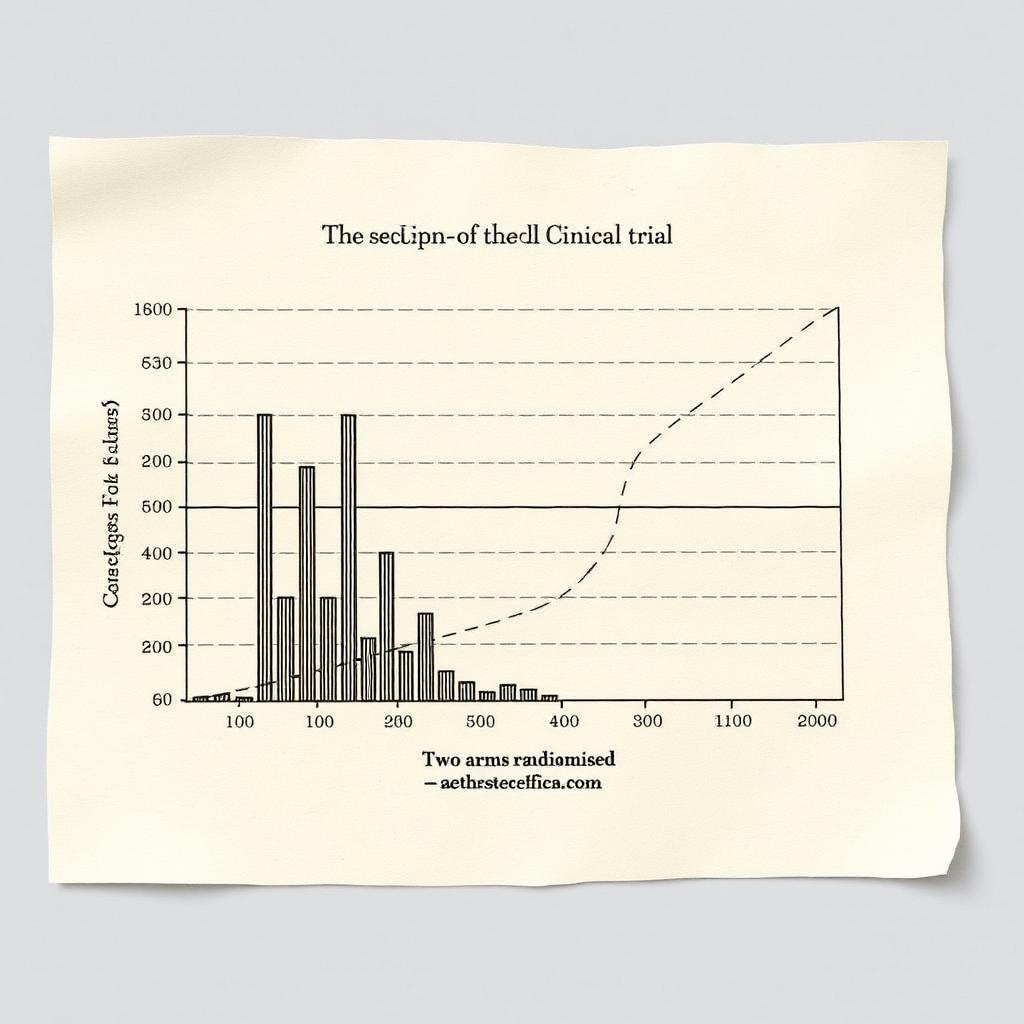
Typical duration of nutrition study types
typical duration in months
Illustrative ranges only; individual studies vary considerably, and some cohort studies follow participants for decades rather than years.
Why headlines conflict
How evidence is graded and combined
Rather than treating every study as equally informative, nutrition researchers use formal hierarchies and grading systems to weigh evidence. A systematic review pre-specifies a search strategy and inclusion criteria before gathering every relevant study on a question, which limits the chance of cherry-picking favourable results. A meta-analysis then statistically pools the results of those studies, weighting each by its size and precision, to produce a single combined estimate with a narrower confidence interval than any individual study could achieve alone.
Frameworks such as GRADE go a step further, formally rating the overall certainty of evidence for a specific question as high, moderate, low or very low, based on factors including study design, consistency across studies, precision, and the risk of bias in how each trial or cohort was conducted. A conclusion labelled 'low certainty' is not necessarily wrong, but it signals that a well-designed future study could plausibly change the estimate, which is a meaningfully different claim from a headline that reports a finding as settled fact.
| Evidence type | What it can establish | Main limitation |
|---|---|---|
| Meta-analysis of multiple RCTs | Reasonably confident causal effect on the measured outcome | Still limited by what the underlying trials measured and how long they ran |
| Single randomised controlled trial | Causal effect within that trial's population and duration | Often short, small, or restricted to surrogate outcomes |
| Prospective cohort study | Association, adjusted for measured confounders | Cannot rule out unmeasured confounding |
| Cross-sectional or case-control study | A snapshot association | Cannot establish which came first, diet or outcome |
| Animal or mechanistic study | Biological plausibility | Does not confirm the effect occurs in free-living humans |
Why headlines conflict
- A single cohort study reports an association, which a headline reports as a finding rather than a hypothesis.
- A different cohort, with a different population and different confounders, later reports the opposite association.
- A subsequent randomised trial on a surrogate marker shows no effect, seemingly contradicting both, though it answers a narrower question over a shorter period.
- Meta-analyses pooling many studies often narrow the uncertainty, but are rarely reported with the same prominence as an individual striking finding.
- Nutrient-by-nutrient framing obscures that most nutrients are consumed as part of whole foods and dietary patterns, which interact in ways single-nutrient study designs cannot fully capture.
The role of industry funding and publication bias
Some nutrition research is funded by food and beverage manufacturers, and studies of a given food have at times been found to report more favourable outcomes for that food when industry-funded, a pattern documented across several product categories. This does not automatically invalidate a study's findings, but it is a reasonable factor to weigh, alongside checking whether a finding has been replicated by independently funded research.
Interpreting a new nutrition headline
Pros
- Large cohort studies can detect real associations across populations that smaller trials would miss
- Meta-analyses of multiple studies reduce the influence of any single study's quirks
- Mechanistic and animal research can support plausibility even where human trials are limited
Cons
- Self-reported intake is measured imprecisely, which can bias associations in either direction
- Confounding by lifestyle and socioeconomic factors is difficult to fully rule out in cohort data
- Short trials on surrogate markers cannot confirm effects on long-term disease outcomes
Key points
- Dietary intake is difficult to measure accurately over the long periods that matter for chronic disease.
- Most diet-disease evidence comes from observational cohorts, which are vulnerable to unmeasured confounding.
- Randomised trials solve confounding but are usually too short or use surrogate markers rather than hard outcomes.
- A single new study, however large, is best read as one data point in an accumulating picture, not a final answer.
- Checking funding sources and looking for independent replication are reasonable steps before treating a finding as settled.
Sponsored video
AdvertisementChecking for a video ad…
Frequently asked questions
Sources
- Dietary Assessment Primer — US National Cancer Institute
- Nutrition research: study design and interpretation — Cochrane Training
- Healthy diet — World Health Organization
- Confounding in nutritional epidemiology — PubMed / National Library of Medicine
- GRADE handbook for grading quality of evidence — GRADE Working Group
About the author
Jess Tran — Health & Wellbeing Writer
Jess writes Inquro's health literacy coverage with a strict rule: explain the evidence, never prescribe. Her articles are reviewed by the science desk and carry an explicit note wherever the underlying research is thin, contested or based on small samples.
- Qualifications
- MPH, Public Health — University of Melbourne
- BSc, Physiology — Monash University
- Experience
- Six years in population health programme evaluation
- Five years writing evidence summaries for non-specialist readers
- Subject areas:
- Public health, Sleep and circadian rhythm, Evidence appraisal
- Contact:
- jess@inquro.example
Reviewed for factual accuracy by Dr. Luca Marchetti, Science Editor (PhD, Environmental Physics), on 30 January 2026.
Traceability of every figure to a named dataset, correct handling of uncertainty, and whether a finding is being generalised beyond its study design.
Inquro articles are commissioned, sourced, reviewed and re-checked under a published editorial policy. Corrections are made in place and dated — write to editorial@inquro.example if you find an error.