In short
Vaccines work by presenting the immune system with a harmless piece or version of a pathogen, prompting the same recognition and memory-forming processes that a real infection would trigger, but without the disease. The resulting memory cells allow a faster, stronger response if the real pathogen is later encountered. How long protection lasts and whether boosters are needed depends on the pathogen, the vaccine type, and how the immune response decays over time.
The immune system already does the hard work behind every vaccine; the vaccine's job is simply to introduce it to a threat safely, in advance. Understanding the underlying biology explains both why vaccines can offer strong protection and why that protection varies by disease, vaccine type and person.
The immune system's two arms
The innate immune system responds quickly and non-specifically to signs of infection. The adaptive immune system responds more slowly on first exposure but is highly specific and, crucially, capable of forming memory. Vaccines work almost entirely by engaging the adaptive arm — training it to recognise a specific pathogen before the body ever meets the real thing.
Antigens: what the immune system actually recognises
An antigen is a molecular fragment, usually a protein, that the immune system can recognise as foreign. Vaccines deliver an antigen, or instructions for cells to briefly produce one, without delivering a pathogen capable of causing full-blown disease. Specialised cells capture the antigen and present it to other immune cells, initiating the adaptive response.
How memory forms
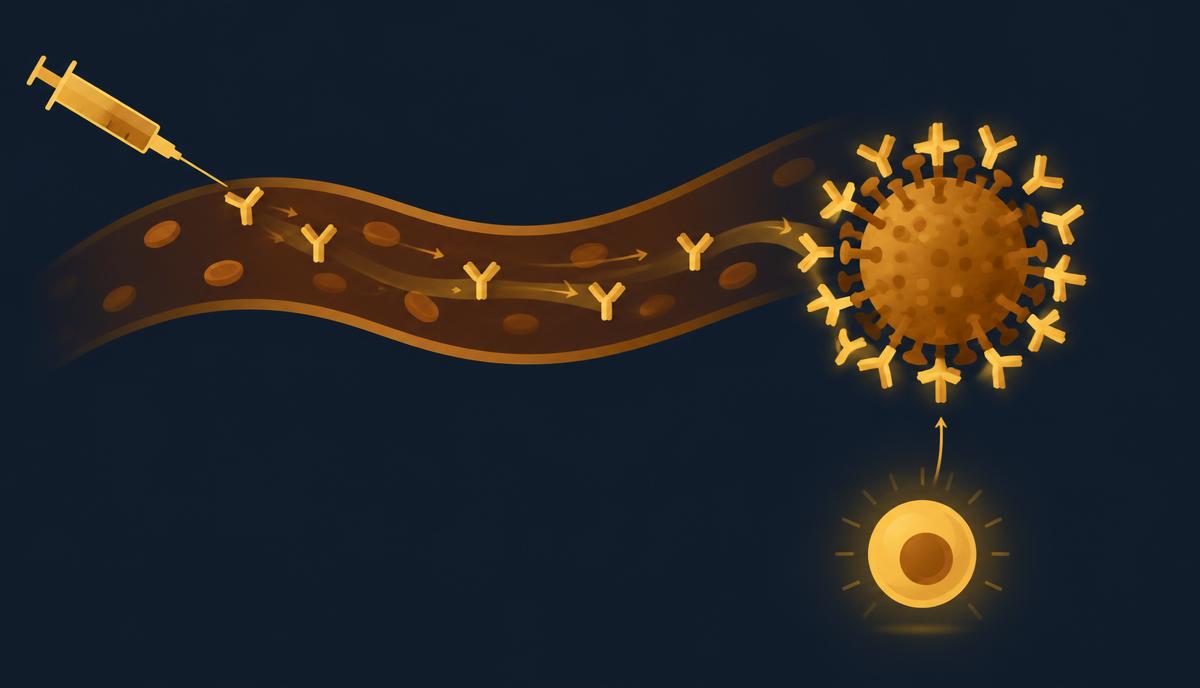
Two cell types are central to vaccine-induced memory. B cells can mature into plasma cells that secrete antibodies — proteins that bind a specific antigen and help neutralise or flag it for destruction — and some B cells become long-lived memory B cells that persist quietly until needed again. T cells, meanwhile, can directly kill infected cells or help coordinate the wider response, and some also persist as memory T cells.
On first exposure to an antigen, whether from a vaccine or a natural infection, this process takes one to two weeks to build a substantial response — which is why vaccination before exposure matters, and why immunity is not immediate. On a subsequent encounter with the real pathogen, memory cells allow a faster and larger response, often fast enough to prevent illness or substantially reduce its severity.
| Vaccine type | How antigen is presented | Example use |
|---|---|---|
| Live attenuated | Weakened form of the actual pathogen replicates briefly | Measles, mumps and rubella; yellow fever |
| Inactivated | Whole pathogen, killed and unable to replicate | Some influenza and polio vaccines |
| Subunit / protein | Purified piece of the pathogen, e.g. a surface protein | Hepatitis B; some pertussis components |
| mRNA | Genetic instructions prompting cells to briefly make the antigen | Some COVID-19 vaccines |
| Viral vector | A harmless virus delivers genetic instructions for the antigen | Some COVID-19 and Ebola vaccines |
Why some vaccines need boosters and others do not
The durability of protection depends on how long memory cells persist, how quickly antibody levels decline, and how much the pathogen itself changes over time. Some vaccines produce memory that lasts decades with few or no boosters; others require periodic boosting either because the initial response wanes or because the pathogen mutates enough that older memory recognises it less well.
Illustrative antibody level trend after vaccination
relative antibody level (arbitrary units)
Simplified illustrative pattern. Real decay curves and the clinical significance of declining antibody levels vary substantially between vaccines and are not interchangeable with this generic shape.
Efficacy versus effectiveness
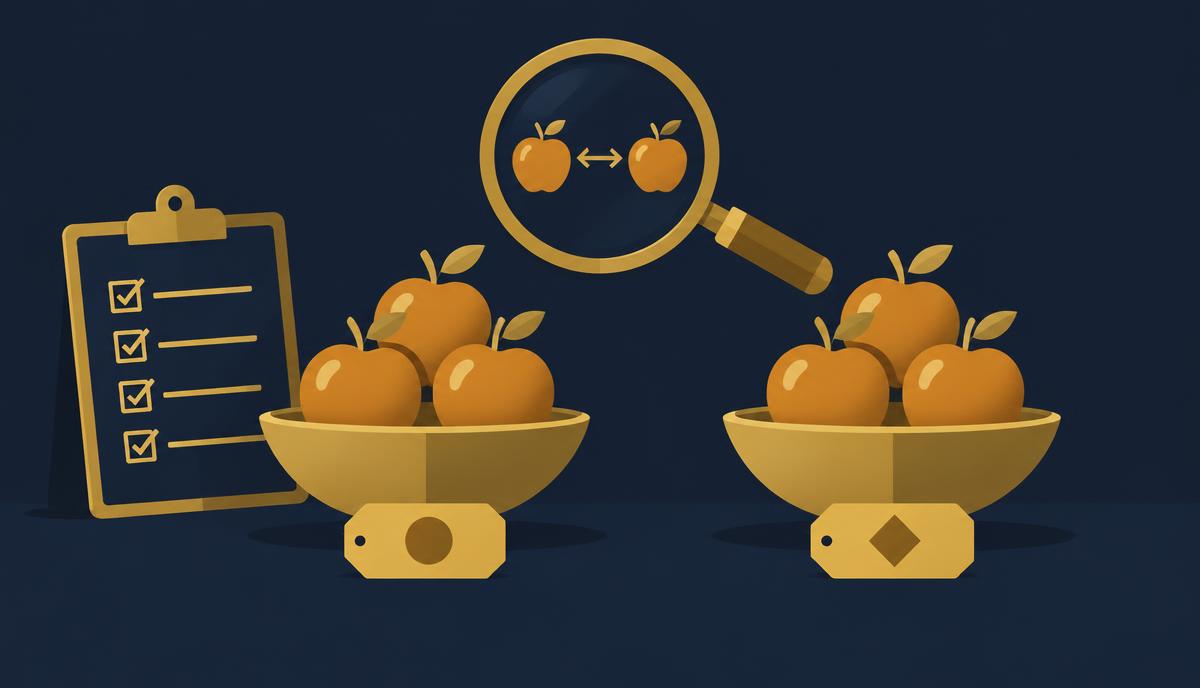
Vaccine efficacy is measured in the controlled conditions of a randomised trial, comparing the rate of a defined outcome in vaccinated versus unvaccinated participants. Vaccine effectiveness is measured afterwards, in real-world populations with more variable exposure, health status and pathogen strains circulating. The two numbers can differ, and effectiveness studies are important precisely because they capture conditions a trial cannot fully replicate.
- A trial reporting 90% efficacy against a defined outcome means the vaccinated group had 90% fewer cases of that outcome than the placebo group over the trial period, not that a vaccinated person has a 90% lower personal risk in every circumstance.
- Efficacy figures depend heavily on which outcome was measured — infection, symptomatic disease, or severe disease produce different percentages from the same vaccine.
- Effectiveness can decline over time even where the vaccine mechanism has not changed, reflecting waning immunity, pathogen evolution, or shifts in the population being studied.
Population-level effects
Because many infections spread from person to person, sufficiently high vaccination coverage can reduce transmission enough to indirectly protect people who are unvaccinated or who respond less strongly to vaccination, an effect generally described as community or herd protection. The threshold needed varies by disease, largely based on how transmissible the pathogen is.
Reading vaccine effectiveness data in the news
Pros
- Randomised trial data before approval offers a controlled estimate of protection against a specific defined outcome
- Post-approval surveillance studies capture real-world effectiveness across broader and more varied populations
- Systematic monitoring for rare adverse events continues well beyond initial approval in most regulatory systems
Cons
- Headline efficacy or effectiveness percentages can obscure which specific outcome was measured
- Effectiveness against emerging pathogen variants may differ from effectiveness reported in earlier studies
- Comparing efficacy figures directly across different vaccines and different trials can be misleading if trial designs and outcomes differ
Innate immunity's supporting role
Although the adaptive response is where lasting memory forms, the innate immune system is not a bystander in vaccination. Many vaccines include an adjuvant — a substance with no antigenic value of its own that amplifies the local innate response at the injection site, recruiting the immune cells that capture antigen and carry it onward to where the adaptive response is initiated. Without an adjuvant, a purified protein antigen alone often fails to provoke a strong enough response to build durable memory, which is why adjuvant choice is itself a significant part of vaccine design rather than an incidental additive.
Where the adaptive response is actually initiated
The lymph nodes, rather than the injection site itself, are where the decisive events happen. Specialised antigen-presenting cells travel from the site of vaccination to the nearest lymph nodes carrying captured antigen, and it is inside these lymph nodes that the antigen is presented to T cells and B cells circulating through the tissue, a small fraction of which will recognise it. Those cells then proliferate rapidly, forming the expanding population from which memory cells and antibody-secreting plasma cells will eventually be drawn. Mild, temporary swelling of nearby lymph nodes after a vaccine reflects this process directly and is a sign the intended immune activity is under way rather than a cause for concern.
Primary versus secondary response, in more detail
The first exposure to a new antigen, whether from a vaccine dose or an initial natural infection, is called the primary response, and it is comparatively slow because very few cells in the body start out able to recognise any specific antigen; those few must be found and expanded from a very small starting pool. A second exposure engages memory cells that already exist in far larger numbers and are already partly primed, producing a secondary response that is faster, larger and often of higher quality, since antibodies produced later in an immune response typically bind their target more tightly than the antibodies produced early on, a process called affinity maturation.
This is the biological reason multi-dose schedules exist for many vaccines. A single dose can prime the immune system, but for many antigens it produces only a modest, short-lived primary response. A second or third dose, given at a properly spaced interval, acts on an immune system that already has a small population of primed cells available, producing a substantially stronger and more durable secondary response than the first dose achieved on its own. Spacing doses too closely can undermine this, since the immune system needs time to complete the maturation process before it is boosted again.
Why some infections leave lifelong immunity and vaccines against them sometimes do not
A natural infection typically exposes the immune system to a far larger and more varied set of antigens, presented over a longer period and often at multiple sites in the body, than a vaccine dose does. This can produce a broader and sometimes more durable memory response for some pathogens, though it comes at the cost of the disease itself, including its complications, which is the trade-off vaccination is designed to avoid. For other pathogens, natural infection and vaccination produce similarly durable protection, and for some the vaccine produces more consistent protection than natural infection does, because the natural infection itself can be mild enough to under-stimulate the immune system in some people.
| Factor | Effect on durability |
|---|---|
| Antigen persistence or repeated dosing | Longer or repeated exposure generally supports more durable memory |
| Pathogen mutation rate | Fast-mutating pathogens can outpace existing memory, requiring updated vaccines |
| Type of memory cell response generated | Some vaccine types generate stronger T cell responses, others stronger antibody responses |
| Age and immune status of the recipient | Immune senescence and certain medical conditions can blunt or shorten the response |
Common misconceptions worth addressing directly
- A vaccine does not give someone the disease it protects against; inactivated, subunit, mRNA and viral vector vaccines cannot cause the illness they target, and even live attenuated vaccines use a deliberately weakened form that does not typically cause the disease in people with normal immune function.
- A mild fever or soreness after vaccination reflects innate immune activation at and near the injection site, not a sign that the vaccine is failing or that the person is unwell in the way the disease itself would cause.
- Needing a booster does not mean earlier doses failed; it usually reflects the normal, expected decline in antibody levels over time or the emergence of new pathogen variants, not a flaw specific to that person's immune system.
- A vaccinated person can sometimes still be infected or mildly symptomatic, particularly for infections that vaccines protect against severe disease more strongly than they protect against infection itself; this is expected and does not mean the vaccine had no effect.
Key points
- Vaccines work by safely exposing the adaptive immune system to an antigen, prompting memory formation without causing the disease itself.
- Memory B cells and memory T cells allow a faster, stronger response on a real future exposure.
- Different vaccine technologies present antigen differently, but all aim to trigger the same underlying memory process.
- Booster needs depend on how quickly immunity wanes and how much the pathogen changes.
- Efficacy from trials and effectiveness from real-world data answer related but distinct questions.
Sponsored video
AdvertisementChecking for a video ad…
Frequently asked questions
Sources
- Understanding How Vaccines Work — US Centers for Disease Control and Prevention
- Vaccines and immunization — World Health Organization
- How vaccines work — NHS
- Immunology of vaccines — National Institute of Allergy and Infectious Diseases
About the author
Jess Tran — Health & Wellbeing Writer
Jess writes Inquro's health literacy coverage with a strict rule: explain the evidence, never prescribe. Her articles are reviewed by the science desk and carry an explicit note wherever the underlying research is thin, contested or based on small samples.
- Qualifications
- MPH, Public Health — University of Melbourne
- BSc, Physiology — Monash University
- Experience
- Six years in population health programme evaluation
- Five years writing evidence summaries for non-specialist readers
- Subject areas:
- Public health, Sleep and circadian rhythm, Evidence appraisal
- Contact:
- jess@inquro.example
Reviewed for factual accuracy by Dr. Rina Halvorsen, Editor-in-Chief (PhD, Cognitive Science), on 11 February 2026.
Structure, claim strength and whether an explanation actually answers the question a reader arrived with.
Inquro articles are commissioned, sourced, reviewed and re-checked under a published editorial policy. Corrections are made in place and dated — write to editorial@inquro.example if you find an error.