In short
Until 2019, the kilogram was still defined by a single metal cylinder locked in a vault outside Paris. Today every SI base unit is fixed to an exact numerical value of a fundamental constant, so units can in principle be realised anywhere with the right apparatus rather than by comparison to one physical object. The change removed the last artefact from the system and tied measurement permanently to the laws of physics.
For most of the twentieth century, a kilogram was, by definition, whatever a particular platinum-iridium cylinder in a vault near Paris weighed. If that cylinder gained a speck of dust or lost a few atoms to cleaning, the kilogram itself had, by definition, changed everywhere on Earth. That situation ended in May 2019, when the last physical artefact in the International System of Units was retired in favour of a definition tied to a constant of nature.
Two eras of definition
The SI has always tried to define units in terms of something universal and reproducible rather than something owned by one institution. Early definitions relied on the natural world as best it could then be measured: the metre as a fraction of the distance from the equator to the North Pole, the second as a fraction of a mean solar day. These were reasonable ideas, but the natural references turned out to be less stable and less precisely accessible than assumed.
The mid-twentieth century solution was to switch to physical artefacts and highly stable laboratory phenomena: a metal bar for the metre, a metal cylinder for the kilogram, and eventually an atomic transition frequency for the second. Artefacts solved the reproducibility problem for a while, but they carried a fatal weakness — a one-of-a-kind object can drift, be damaged, or simply be inaccessible to anyone outside the institution that holds it.
The 2019 revision: constants instead of objects
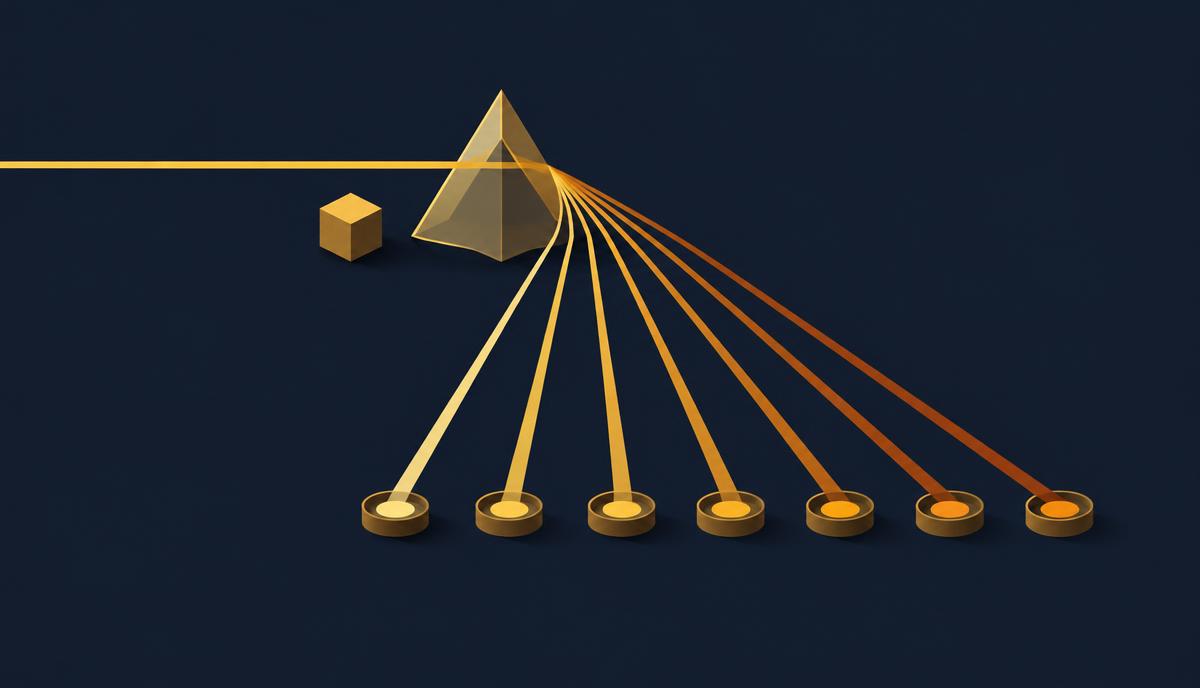
The current SI, agreed by the General Conference on Weights and Measures and effective from 20 May 2019, defines all seven base units by fixing the exact numerical value of seven reference constants when expressed in SI units. Nothing about the constants themselves is measured or estimated in the definition — their values are fixed by international agreement, and every realisation of a unit is an experiment designed to reproduce that fixed number.
| Base unit | Quantity | Fixed constant used |
|---|---|---|
| second (s) | time | Caesium-133 hyperfine transition frequency, 9,192,631,770 Hz |
| metre (m) | length | Speed of light in vacuum, 299,792,458 m/s |
| kilogram (kg) | mass | Planck constant, 6.62607015 × 10⁻³⁴ J·s |
| ampere (A) | electric current | Elementary charge, 1.602176634 × 10⁻¹⁹ C |
| kelvin (K) | temperature | Boltzmann constant, 1.380649 × 10⁻²³ J/K |
| mole (mol) | amount of substance | Avogadro constant, 6.02214076 × 10²³ per mole |
| candela (cd) | luminous intensity | Luminous efficacy of 540 THz radiation, 683 lm/W |
Because the second was already defined by the caesium transition since 1967, several of the other constants are defined in terms that also reference the second. The metre, for instance, is derived from the speed of light and the second: light travels exactly 299,792,458 metres in one second, by definition, so fixing the speed of light and the second together fixes the metre.
Why the kilogram was the hard case
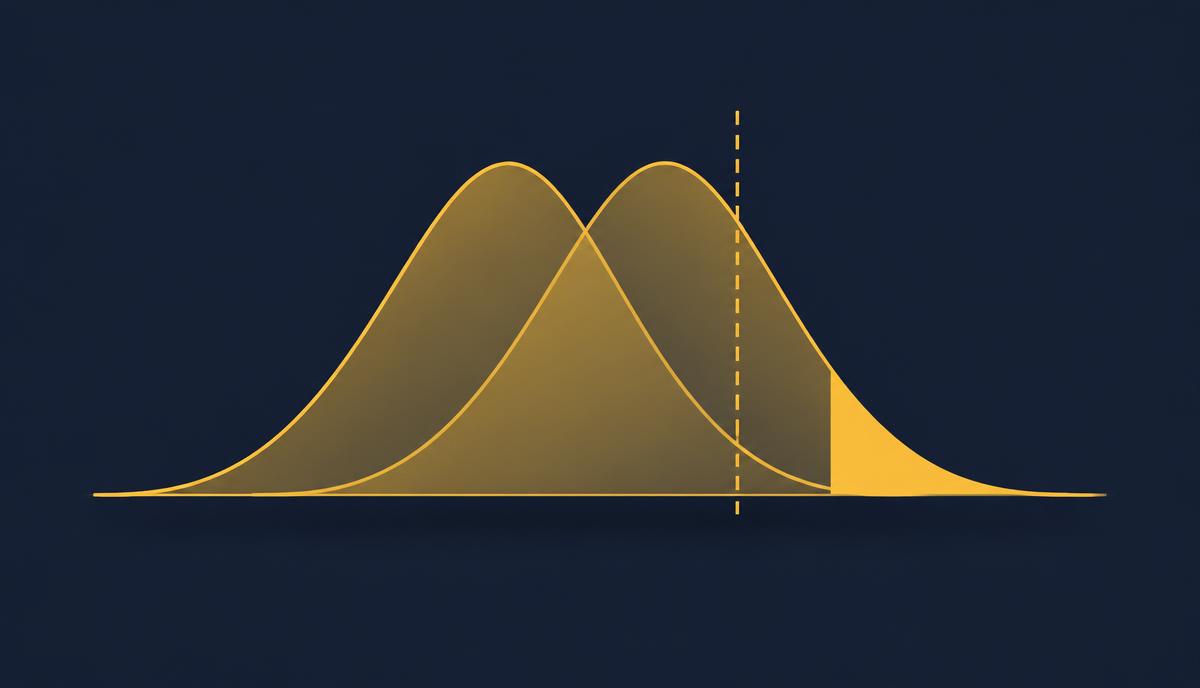
Mass was the last quantity anchored to an artefact because linking it to a constant required extraordinarily precise apparatus. Two independent experimental routes were developed to realise the kilogram from the Planck constant: the Kibble balance, which compares mechanical and electrical power using a coil moving in a magnetic field, and the X-ray crystal density method, which counts atoms in a nearly perfect silicon sphere. When both methods, run by different national laboratories using different physics, converged on the same value for the Planck constant to within a few parts in a hundred million, the definition change went ahead.
Relative uncertainty of kilogram realisation before and after redefinition
Relative standard uncertainty (parts in 10⁸), illustrative
Figures are illustrative of the order of magnitude discussed in CODATA and BIPM technical reports around the 2019 redefinition; exact values varied by laboratory and year.
What actually changed for ordinary measurement
For almost everyone, nothing changed. A kilogram of flour still weighs the same as it did the day before the redefinition, because the fixed value of the Planck constant was chosen to match the existing artefact's mass as closely as the best measurements allowed. The change is invisible at the level of a kitchen scale and matters only where measurement science pushes toward the limits of precision — semiconductor fabrication, gravitational-wave detectors, satellite positioning, and the calibration chains that ultimately trace back to national metrology institutes.
- No single object can be lost, damaged or contaminated, because there is no longer a single physical prototype for any base unit.
- Any suitably equipped laboratory can, in principle, realise a unit from first principles rather than borrowing a copy from a reference artefact.
- The definitions no longer depend on the stability of a specific material; the fixed constants are treated as exact and unchanging.
- Realisation is now decoupled from definition: the number is fixed forever, while experimental techniques for reproducing it can keep improving.
Realisation versus definition
A subtlety often missed in popular accounts is the difference between defining a unit and realising it. The definition fixes an exact number with zero uncertainty by construction — the Planck constant is now exactly 6.62607015 × 10⁻³⁴ joule-seconds, full stop. Realising the unit in a laboratory, however, is an experimental measurement, and experiments always carry some uncertainty. A Kibble balance measuring a mass today has an uncertainty of a few parts in a hundred million, not because the definition is fuzzy but because building physical apparatus that reproduces the definition perfectly is impossible.
Traceability after the redefinition
Ordinary instruments still calibrate through a chain of comparisons rather than realising a base unit directly. A national metrology institute realises the kilogram using a Kibble balance, transfers that mass value to a set of reference weights, an accredited calibration laboratory compares its own reference weights against those, and ultimately a factory scale is calibrated against the laboratory's weights. Removing the artefact did not remove the chain; it removed the single point of failure at the top of it.
- A national institute realises the unit from its fixed defining constant using specialised apparatus.
- That realisation is used to calibrate a small number of national reference standards.
- Accredited laboratories calibrate their own working standards against the national references.
- Everyday instruments are calibrated against the accredited laboratory's working standards.
- Uncertainty grows slightly at each step, which is why critical measurements use as short a chain as practical.
| Property | Artefact-based (pre-2019 kilogram) | Constant-based (current SI) |
|---|---|---|
| Reference object | One physical cylinder in France | None — a fixed numerical constant |
| Risk of loss or damage | Single point of failure | No single object to lose |
| Who can realise the unit | Only holders of official copies | Any suitably equipped laboratory |
| Improves with better technology | No, the artefact is fixed | Yes, realisation accuracy keeps improving |
The constant-based system in practice
Pros
- Removes single-point artefact risk from the definitions permanently.
- Allows independent realisation anywhere with suitable equipment.
- Decouples definitional exactness from experimental precision, so techniques can improve indefinitely.
- Improves international consistency because no institute holds a privileged physical reference.
Cons
- Realising a unit from a constant requires far more sophisticated apparatus than comparing two objects.
- Most laboratories still rely on a calibration chain rather than direct realisation, so practical uncertainty is dominated by that chain, not the definition.
- The transition required years of parallel measurement campaigns to fix consistent constant values, which delayed adoption.
Key points
- Since 20 May 2019, all seven SI base units are defined by fixing exact numerical values of physical constants.
- The kilogram was the last unit tied to a physical artefact and is now defined via the Planck constant.
- Fixing a constant is not the same as measuring it — the definition has zero uncertainty, but every real-world realisation does.
- Everyday measurement is unaffected because the fixed values were chosen to match prior best measurements as closely as possible.
- Traceability still runs through calibration chains from national institutes down to working instruments.
The metre before 1960: a story of physical drift
The metre's history illustrates why the whole system eventually moved away from artefacts. It was originally defined in 1793 as one ten-millionth of the distance from the North Pole to the equator along a meridian through Paris, a definition tied to an actual survey of the Earth rather than to a manufactured object. That survey, however, contained small errors, and the physical platinum bar later made to represent the result inevitably diverged slightly from the original geodetic intention. In 1889 the metre was redefined again as the distance between two scratched lines on a specific platinum-iridium bar kept at the International Bureau of Weights and Measures, a definition that at least removed dependence on a repeated survey but reintroduced the single-artefact fragility that would eventually affect the kilogram as well. That bar remained the definition until 1960, when the metre was redefined in terms of a specified number of wavelengths of light emitted by krypton-86 atoms — the first SI base unit tied to an atomic property rather than a manufactured object, and the direct conceptual ancestor of the current speed-of-light definition adopted in 1983.
The mole and Avogadro's constant
The mole's history follows a similar arc from a practical laboratory convenience to an exact constant. It was long defined as the amount of substance containing as many elementary entities as there are atoms in exactly 12 grams of carbon-12, which tied the mole indirectly to the kilogram — meaning any future change to the kilogram's definition would have silently changed the mole's practical size as well. The 2019 revision severed that dependency by instead fixing the numerical value of the Avogadro constant itself at exactly 6.02214076 × 10²³ per mole, so the mole is now defined independently of any other unit, including the kilogram. This mattered specifically to analytical and physical chemistry, where the mole underpins virtually every quantitative calculation, because it removed a subtle coupling that most working chemists were never required to think about but that metrologists considered a structural weakness in the pre-2019 system.
International cooperation behind the definitions
None of these definitions are set unilaterally. The General Conference on Weights and Measures, made up of representatives of the roughly sixty-plus member states of the Metre Convention (a treaty dating to 1875), meets periodically to formally adopt changes to the SI, acting on technical work carried out continuously by the International Bureau of Weights and Measures in Sèvres, France, and by national metrology institutes such as NIST in the United States, NPL in the United Kingdom, and PTB in Germany. Before the 2019 revision was adopted, these institutes spent roughly a decade running parallel measurement campaigns with independent apparatus specifically to ensure that fixing the defining constants would not create a discontinuity with previous measurements — a coordination effort considerably larger and slower than the single vote that formally approved the change.
What comes next in metrology
With all seven base units now defined by fixed constants, current metrological research has shifted from redefinition toward improving realisation — building apparatus that reproduces the fixed definitions with ever smaller experimental uncertainty, and extending this approach to derived units and new domains. One active area is redefining the second itself using optical atomic clocks based on transitions in elements such as strontium or ytterbium, which are already demonstrably more stable and reproducible in laboratory comparisons than the caesium standard that currently defines the second, though international consensus has not yet settled on which optical transition to adopt or exactly when a formal change would take place. This illustrates a broader point about the 2019 system: fixing the numbers did not freeze metrology in place, it simply moved the site of ongoing improvement from the definitions themselves to the experiments that realise them.
Sponsored video
AdvertisementChecking for a video ad…
Frequently asked questions
Sources
- The International System of Units (SI Brochure, 9th edition) — Bureau International des Poids et Mesures
- On the 2019 redefinition of the SI base units — NIST
- CODATA Internationally Recommended Values of the Fundamental Physical Constants — NIST/CODATA
- Resolution 1 of the 26th CGPM: On the revision of the SI — Bureau International des Poids et Mesures
About the author
Dr. Luca Marchetti — Science Editor
Luca translates primary research into readable explanation. He reviews every science and health article for claim strength, checks that each figure traces back to a named dataset, and flags anywhere a study's finding has been stretched beyond what its method supports.
- Qualifications
- PhD, Environmental Physics — University of Bologna
- MSc, Physics — Sapienza University of Rome
- Experience
- Ten years of published research on atmospheric measurement records
- Six years as a reviewer for science communication projects
- Subject areas:
- Climate systems, Measurement, Scientific literacy
- Contact:
- luca@inquro.example
Reviewed for factual accuracy by Dr. Rina Halvorsen, Editor-in-Chief (PhD, Cognitive Science), on 30 June 2026.
Structure, claim strength and whether an explanation actually answers the question a reader arrived with.
Inquro articles are commissioned, sourced, reviewed and re-checked under a published editorial policy. Corrections are made in place and dated — write to editorial@inquro.example if you find an error.