In short
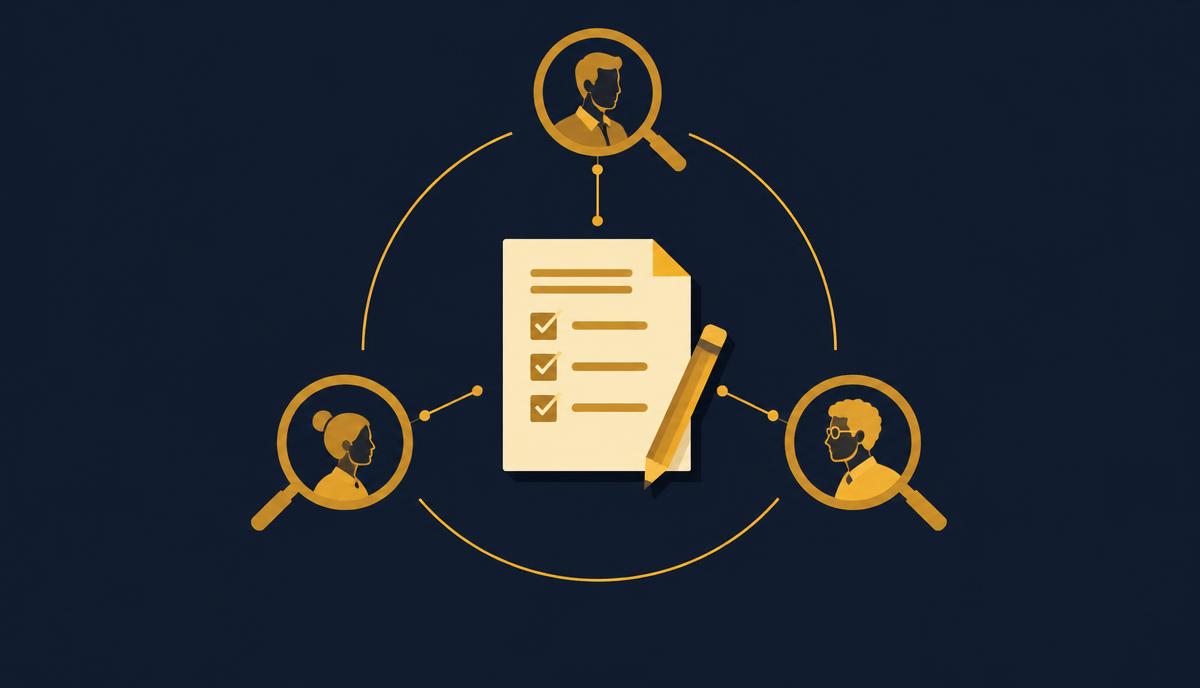
Peer review is the process by which independent experts assess a scientific manuscript before a journal decides whether to publish it, checking for methodological soundness, clarity and whether conclusions follow from the evidence. It is not a verification that results are correct, and it does not typically involve reviewers repeating the experiments themselves. Understanding what peer review actually checks, and what it cannot catch, is essential to interpreting the label 'peer-reviewed' correctly.
The phrase 'peer-reviewed' is often treated as shorthand for 'true'. In practice it means something more limited: that a small number of independent experts read the manuscript before publication and judged the methods, reasoning and presentation to meet a journal's bar for publication. That is a meaningful filter, but it is a filter on plausibility and rigour, not a guarantee of correctness.
The typical path of a manuscript
- An author submits a manuscript to a journal, which is first checked by an editor for basic fit and quality before being sent out.
- The editor identifies two or more independent experts in the relevant subfield who agree to review it without payment.
- Reviewers read the manuscript in detail and submit written reports, usually recommending accept, reject, or revision.
- The editor weighs the reports and the manuscript's merits and issues a decision, often requesting revisions rather than an outright accept or reject.
- The author revises and resubmits, sometimes through several rounds, until the editor is satisfied or the manuscript is rejected.
- An accepted manuscript proceeds to copyediting and formal publication, sometimes with reviewer reports published alongside it.
What reviewers actually check
Reviewers assess whether the research question is meaningful, whether the methodology is appropriate to answer it, whether the statistical analysis is sound, whether the conclusions are supported by the results presented, and whether the manuscript engages honestly with relevant prior work and its own limitations. They are evaluating the argument on the page, not independently verifying the underlying data.
| Typically checked | Typically not checked |
|---|---|
| Is the stated methodology appropriate for the research question | Whether the reported raw data actually exists or was recorded as described |
| Does the statistical analysis match the data and hypotheses | Whether the experiment can be independently replicated |
| Do the conclusions follow logically from the results shown | Whether the authors have committed fraud or fabrication |
| Is prior relevant literature engaged with honestly | Whether every calculation was independently rerun by the reviewer |
| Are limitations and alternative explanations acknowledged | Whether the underlying code, if any, runs correctly |
Variants of the review process
| Model | Who knows whose identity | Main advantage claimed | Main criticism |
|---|---|---|---|
| Single-blind | Reviewers know authors; authors do not know reviewers | Reviewers can judge track record and context | Risk of bias based on author identity or institution |
| Double-blind | Neither side knows the other's identity | Reduces bias from reputation, gender or institution | Author identity is often guessable from writing style or references |
| Open review | Both sides know identities, reports sometimes published | Greater accountability and transparency | May discourage frank criticism, especially from junior reviewers |
| Post-publication review | Manuscript published first, comments follow openly | Faster dissemination, wider scrutiny | Readers may treat unreviewed preprints as final before critique arrives |
Documented weaknesses
Peer review has genuine, well-documented failure modes. Reviewers disagree with each other more often than the public image of scientific consensus suggests, and studies of the process have found that the same manuscript, resubmitted with minor changes, can be accepted by one reviewer and rejected by another. Reviewing is unpaid, time-pressured work layered onto researchers' other responsibilities, and thoroughness varies considerably by reviewer and by field.
- Fabricated data and image manipulation have passed review and been caught only after publication, sometimes years later.
- Reviewers may be unable to detect subtle statistical errors that require closely re-deriving the analysis.
- Prestige bias exists — manuscripts from well-known authors or institutions are sometimes reviewed more leniently.
- Reviewer availability constraints mean editors sometimes cannot secure genuinely qualified experts for a niche subfield.
- Publication bias favours positive, novel results, which can distort what gets submitted and accepted in the first place.
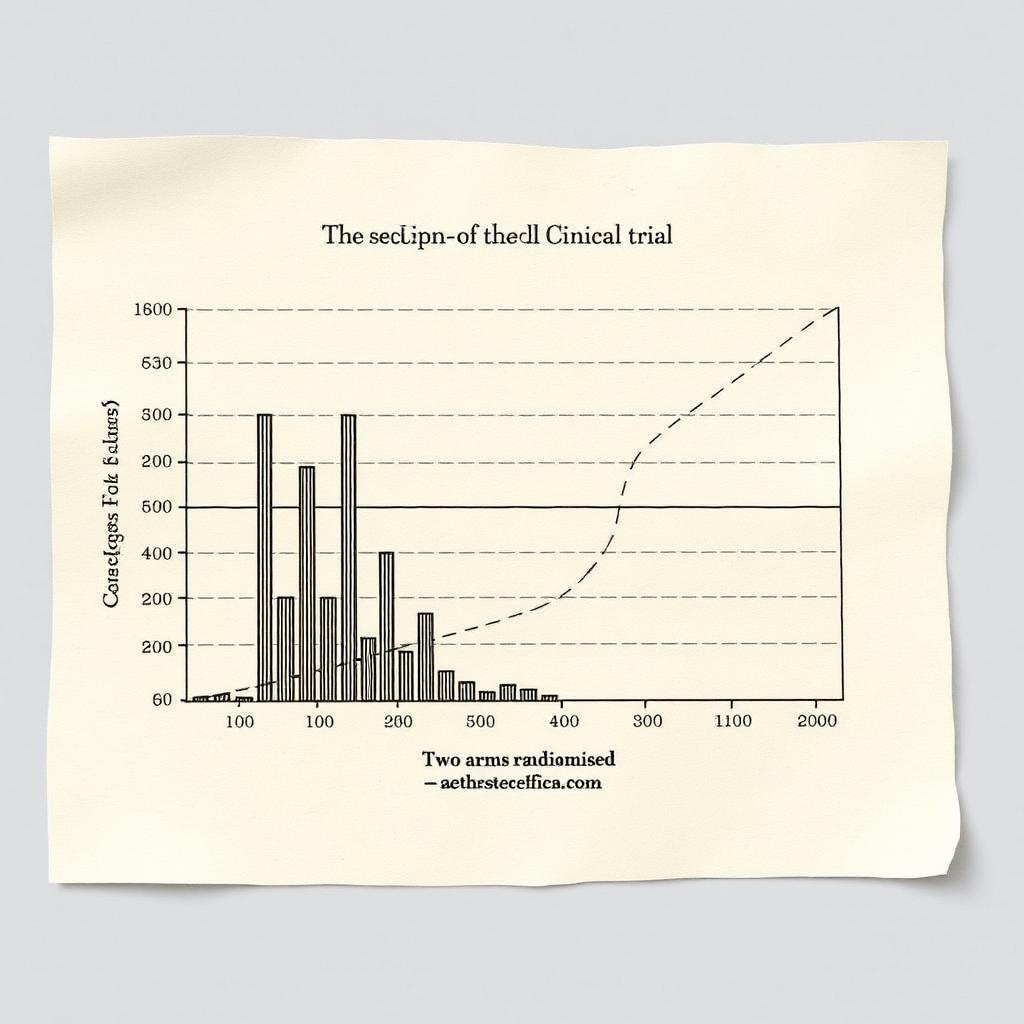
Retracted articles indexed per year
Number of retraction notices tracked, illustrative trend
Illustrative trend consistent with figures reported by the Retraction Watch database, which has documented a substantial rise in tracked retractions over the past two decades, driven partly by better detection tools and more publications overall, not solely by worsening misconduct.
That rise partly reflects genuinely improved detection — plagiarism-checking software, image-forensics tools, and dedicated sleuthing communities have all matured — rather than being pure evidence that fraud has become more common. It nonetheless demonstrates that peer review, on its own, does not catch every serious problem before publication.
The replication dimension
A separate but related concern is that even honestly reported, competently reviewed studies do not always replicate. Large-scale replication projects in psychology and other fields have found that a substantial share of published significant results fail to reproduce the same effect when the study is repeated independently with a larger, pre-registered sample. Peer review evaluates whether a study was conducted and reported reasonably; it cannot evaluate whether the underlying effect is real, which only replication can address.
Peer review as a quality filter
Pros
- Provides an independent check on methodology and reasoning before public claims are made.
- Filters out a substantial share of poorly designed or poorly reasoned submissions.
- Creates a paper trail of expert engagement and, in open models, public accountability.
- Encourages authors to anticipate and address objections before publication.
Cons
- Cannot verify raw data, detect sophisticated fraud, or guarantee replicability.
- Reviewer availability and quality vary widely across fields and journals.
- Susceptible to bias based on author reputation, institution or ideological alignment.
- Slow relative to the pace of preprint sharing, creating pressure to bypass it entirely.
Key points
- Peer review checks whether a manuscript's methods, reasoning and conclusions are coherent and adequately supported, not whether the underlying data is genuine.
- Reviewers almost never re-run experiments or access raw data directly.
- Different review models (single-blind, double-blind, open, post-publication) trade off bias control against transparency and speed.
- Rising retraction counts partly reflect better detection tools, not just worsening misconduct.
- Peer review and independent replication check different things; passing one does not guarantee the other.
How the system developed
Formal peer review as a routine, expected step is younger than most people assume. The Royal Society's Philosophical Transactions, founded in 1665, is often cited as the first scientific journal, but for most of its early history editorial decisions rested largely with a single editor rather than a panel of independent referees. Systematic, externally sourced review became standard practice across most disciplines only in the mid-twentieth century, driven partly by the postwar expansion in the volume of submitted research, which made it impractical for a lone editor to judge every manuscript personally, and partly by growing institutional pressure to demonstrate rigour before public funding decisions and career advancement came to depend so heavily on publication record.
That history matters because it explains why the system looks the way it does: peer review was built incrementally to solve an editorial workload problem, not designed from first principles as a fraud-detection or replication mechanism. Many of the criticisms levelled at it today — that it cannot catch fabricated data, that it does not verify replicability — are really observations that the system is being asked to do more than it was originally built for, because 'peer-reviewed' has since become a proxy that funders, employers and the public treat as a much broader certificate of trustworthiness than editors ever intended it to be.
The editor's triage role
Before any external reviewer sees a manuscript, an editor performs a first filter, and this stage is responsible for rejecting a substantial share of submissions at many journals, often without external review at all. Editors check basic fit with the journal's scope, an evident minimum standard of methodology and writing, and whether the claimed contribution appears novel enough to be worth reviewers' unpaid time. This desk-rejection stage is rarely visible to readers of the eventually published literature, but it shapes which manuscripts even reach the review process being discussed, and its consistency varies considerably between journals and between individual editors handling the same field.
Reviewer incentives and the case for reform
Because reviewing is unpaid and typically anonymous, the incentive structure around it is often described as a collective action problem: individual researchers benefit from a well-functioning review system overall but bear a direct personal cost, in unpaid hours, each time they agree to review someone else's work. Several institutional responses have been proposed and partially adopted. Some publishers now offer reviewers formal recognition through platforms that log verified review activity for use in job and grant applications. A smaller number pay reviewers directly, though this remains uncommon and raises its own concerns about incentivising quantity of reviews over their quality.
A more structural reform, registered reports, addresses a different weakness entirely: publication bias toward positive, novel findings. Under this model, a journal reviews and conditionally accepts a study's methodology and analysis plan before the data is collected, which means the eventual decision to publish is no longer influenced by whether the results turned out to be exciting or statistically significant. A growing number of journals across psychology, medicine and other fields now offer this track alongside traditional submission, though it remains a minority of total published output.
| Reform | Weakness addressed | Adoption so far |
|---|---|---|
| Registered reports | Publication bias toward positive results | Offered by several hundred journals, still a minority track |
| Open reviewer recognition platforms | Lack of reviewer incentive and credit | Widely available, uptake varies by field |
| Post-publication commenting | Slow correction of errors after publication | Common on preprint servers, less so on final journal versions |
| Mandatory data and code sharing | Inability to check underlying data during review | Increasingly required by major funders and journals, unevenly enforced |
Reading a peer-reviewed claim critically
None of this means the label is worthless; it means the label answers a narrower question than headlines built on it often imply. A useful habit when encountering a peer-reviewed finding reported in the news is to ask which journal it appeared in and whether that journal has a track record in the specific subfield, whether the study design (sample size, controls, pre-registration) matches the strength of the claim being made about it, and whether independent replication has followed. A single peer-reviewed study, however well conducted, is one data point in an ongoing process, not a final verdict, and treating it as the latter is a misunderstanding of what review was ever designed to certify.
Sponsored video
AdvertisementChecking for a video ad…
Frequently asked questions
Sources
- What is peer review? — Nature
- Retraction Watch Database — The Center for Scientific Integrity
- Estimating the reproducibility of psychological science — Open Science Collaboration, Science
- COPE Ethical Guidelines for Peer Reviewers — Committee on Publication Ethics
About the author
Dr. Rina Halvorsen — Editor-in-Chief
Rina leads editorial standards at Inquro. She spent eleven years studying how people build durable mental models of technical subjects, and now designs the review process that every Inquro explainer passes through before publication. She is responsible for the accuracy policy, the correction log and the sourcing rules used across the knowledge base.
- Qualifications
- PhD, Cognitive Science — University of Oslo
- MSc, Psychology of Education — University of Bergen
- Experience
- Eleven years of research on comprehension and mental-model formation
- Five years commissioning and editing long-form technical explainers
- Subject areas:
- Learning science, Editorial standards, Research methods
- Contact:
- rina@inquro.example
Reviewed for factual accuracy by Dr. Luca Marchetti, Science Editor (PhD, Environmental Physics), on 2 June 2026.
Traceability of every figure to a named dataset, correct handling of uncertainty, and whether a finding is being generalised beyond its study design.
Inquro articles are commissioned, sourced, reviewed and re-checked under a published editorial policy. Corrections are made in place and dated — write to editorial@inquro.example if you find an error.