In short
Concept maps organise knowledge as labelled propositions — nodes connected by relationship words that form readable statements — rather than as unlabelled branches. This structural discipline is what most of the research credit for improved comprehension traces back to, and it is also what most casual 'concept maps' skip.
A concept map looks, at a glance, like a diagram of boxes and lines. What separates it from an ordinary diagram or a mind map is a specific structural rule: every connecting line carries a label describing the relationship, so that following any two connected concepts and their linking phrase produces a readable statement — a proposition. That single requirement is doing most of the cognitive work the technique is credited with.
The proposition is the basic unit
In a properly constructed concept map, the basic unit of meaning is not the node but the proposition: concept, linking phrase, concept. For example, 'insulin — lowers — blood glucose' is a proposition. A map built entirely from such labelled triples can be read as a series of factual claims, which makes it possible to check whether the map is actually correct, not just tidy.
| Feature | Concept map | Mind map |
|---|---|---|
| Central structure | No required single centre; can have multiple starting concepts | Typically radiates from one central topic |
| Links | Labelled, describing the specific relationship | Usually unlabelled branches |
| Hierarchy | General concepts near the top, more specific ones below, with cross-links allowed | Often purely radial, without enforced hierarchy |
| Primary use researched | Representing relationships between concepts in a domain | Brainstorming and idea generation |
| Checkability | Can be read as explicit propositions and checked for accuracy | Harder to check because relationships are implicit |
Mind maps are a genuinely useful and distinct technique, particularly well suited to brainstorming, but they are frequently confused with concept maps in casual use, and the research evidence for the two techniques should not be treated as interchangeable, since most controlled comparisons of learning outcomes have specifically tested labelled, propositional concept maps.
Why labelling relationships matters cognitively
Writing a linking phrase forces a decision that drawing an unlabelled line does not: you have to state, in words, what the relationship actually is. This is a small act of retrieval and elaboration each time, and it is much harder to fake than simply drawing two boxes near each other because they seem related. Educational researchers describe this as externalising a proposition — converting a vague sense of connectedness into an explicit, checkable claim.
This process also tends to expose gaps. It is common, while forcing a label onto a connection, to realise that the relationship you intended to draw does not actually hold, or that you cannot articulate it precisely, which is itself useful diagnostic information about where understanding is thin.
What the evidence shows
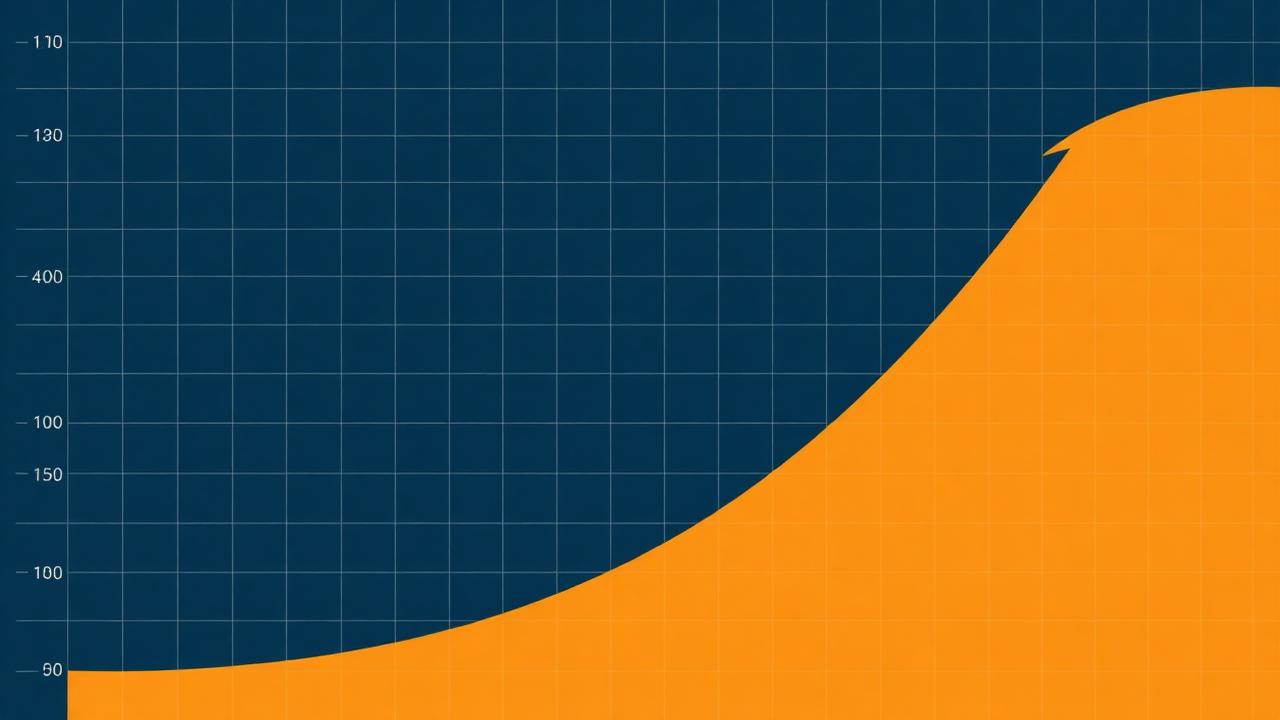
A number of meta-analyses comparing concept mapping to other study activities — most commonly reading, rereading, or outlining — report a positive effect on measures of comprehension and knowledge retention, with effect sizes generally described as moderate. The effect tends to be larger when comparing concept mapping to relatively passive study activities like rereading, and smaller or inconsistent when compared against other active techniques such as practice testing.
Illustrative comparison of study techniques against comprehension test performance
relative effect size (rereading baseline = 1.0)
A simplified summary of the general pattern reported across multiple meta-analyses comparing study techniques; individual studies vary in task, population and effect size.
Some studies find concept mapping particularly useful for material that is inherently relational — biological systems, historical cause-and-effect chains, interconnected scientific concepts — and less advantageous for material that is more linear or sequential, such as a step-by-step procedure, where the relationships being mapped add less value than the order itself.
Building versus studying a ready-made map
An important distinction in the research is between constructing your own concept map and studying one that someone else has already built. Constructing a map yourself requires retrieving and organising knowledge, which produces the learning benefit described above. Studying a pre-made expert map is a more passive activity, closer to reading a diagram than to using the technique's active mechanism, and several studies find a smaller benefit from this passive use, though it can still help by presenting a domain's structure clearly, especially early in learning a topic.
- Start from a focus question rather than a topic name — 'what factors regulate blood glucose' produces a more useful map than 'blood glucose', because a question implies relationships to look for.
- Arrange more general, inclusive concepts nearer the top and more specific ones below, but allow cross-links between distant branches where a genuine relationship exists.
- Write a linking phrase on every connection before considering it finished; an unlabelled line is an unfinished thought.
- Revise the map after new material rather than starting a fresh one each time; the revision process itself surfaces where prior understanding needs correcting.
- Keep concepts as short noun phrases rather than long sentences, so the proposition structure stays legible when read aloud.
Limitations and where the method fits
Concept mapping takes more time per unit of material covered than reading or highlighting, and building a map badly — treating it as decoration rather than as a set of checkable propositions — captures little of the documented benefit. It is not a substitute for retrieval practice or spaced review for maintaining long-term memory of discrete facts; it is better understood as a technique for building and checking the structure of understanding before that structure needs to be retained and applied.
Assessing concept mapping as a study technique
Pros
- Forces explicit, checkable statements of how ideas relate rather than vague association.
- Particularly effective for material with genuine relational or causal structure.
- Exposes gaps in understanding during construction, before a test does.
- Can be revised incrementally as understanding of a topic develops.
Cons
- Slower than rereading or highlighting for the same amount of material.
- Studying someone else's finished map delivers a smaller benefit than building your own.
- Less useful for strictly sequential or procedural material.
- Does not substitute for spaced retrieval practice in maintaining long-term recall of discrete facts.
What to remember
- A concept map's defining feature is labelled links that form readable propositions, not just connected boxes.
- This differs structurally from mind maps, which are typically unlabelled and radial.
- Meta-analyses generally find a moderate benefit over passive study techniques like rereading.
- Building your own map produces more learning benefit than studying a ready-made one.
- The technique suits relational material better than strictly sequential material.
Sponsored video
AdvertisementChecking for a video ad…
Frequently asked questions
Sources
- The Theory Underlying Concept Maps and How to Construct and Use Them — Joseph D. Novak & Alberto J. Cañas, Institute for Human and Machine Cognition
- Learning How to Learn — Joseph D. Novak & D. Bob Gowin, Cambridge University Press
- The Effects of Concept Mapping on Student Achievement: A Meta-Analysis — Review of Educational Research
- Improving Students' Learning With Effective Learning Techniques — Psychological Science in the Public Interest
About the author
Dr. Rina Halvorsen — Editor-in-Chief
Rina leads editorial standards at Inquro. She spent eleven years studying how people build durable mental models of technical subjects, and now designs the review process that every Inquro explainer passes through before publication. She is responsible for the accuracy policy, the correction log and the sourcing rules used across the knowledge base.
- Qualifications
- PhD, Cognitive Science — University of Oslo
- MSc, Psychology of Education — University of Bergen
- Experience
- Eleven years of research on comprehension and mental-model formation
- Five years commissioning and editing long-form technical explainers
- Subject areas:
- Learning science, Editorial standards, Research methods
- Contact:
- rina@inquro.example
Reviewed for factual accuracy by Jess Tran, Health & Wellbeing Writer (MPH, Public Health), on 11 March 2026.
Whether health claims stay descriptive rather than prescriptive, and whether study limitations are visible in the body text.
Inquro articles are commissioned, sourced, reviewed and re-checked under a published editorial policy. Corrections are made in place and dated — write to editorial@inquro.example if you find an error.